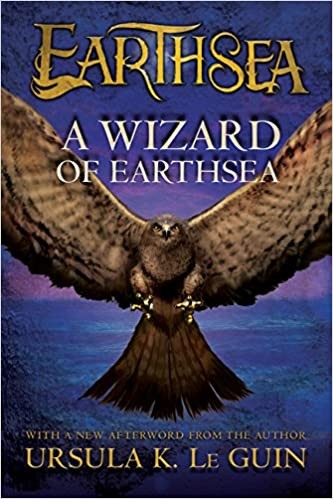
There’s a moment early on where a boy named Ged, still a student, summons something out of pride he shouldn’t have and lets a nameless shadow-creature loose into the world, and the entire rest of the book is him growing up enough to stop running from what he made. That’s it, that’s the whole plot, no armies, no dark lord waiting at the end with a monologue. I went in expecting a gateway fantasy, easy comfort reading before bed, and got something quietly more demanding than that.
The magic system is the part that’s echoed forward into a hundred books since, the idea that everything, a rock, a person, a shadow, has a true name, and knowing it gives you power over the thing. I kept thinking about how directly that idea seems to have fed into books written decades later that use naming-magic as their whole hook, and it’s satisfying to read the version that got there first and did it with this much restraint. What surprised me more, honestly, was Ged himself. Le Guin makes him dark-skinned and the invading raiders who threaten the archipelago white-skinned, a small deliberate reversal of a color coding fantasy leans on constantly without thinking about it, and it’s handled without ever calling attention to itself on the page.
I’ll admit the prose reads more like a told legend than a close third person novel, distant on purpose, and it took me a couple chapters to stop expecting more scene-level intimacy and just accept the fireside-story register it’s working in. There’s also a real gender imbalance in how magic gets distributed in this world, only men get to be wizards, women get scraps of “witchery,” and it’s worth knowing going in that Le Guin herself later said in interviews she’d handle it differently if she wrote it again. Doesn’t undo what the book does well. The ending, where Ged finally turns to face the shadow instead of fleeing it and discovers what it actually is, is one of the cleanest, least sentimental resolutions I’ve read in fantasy.