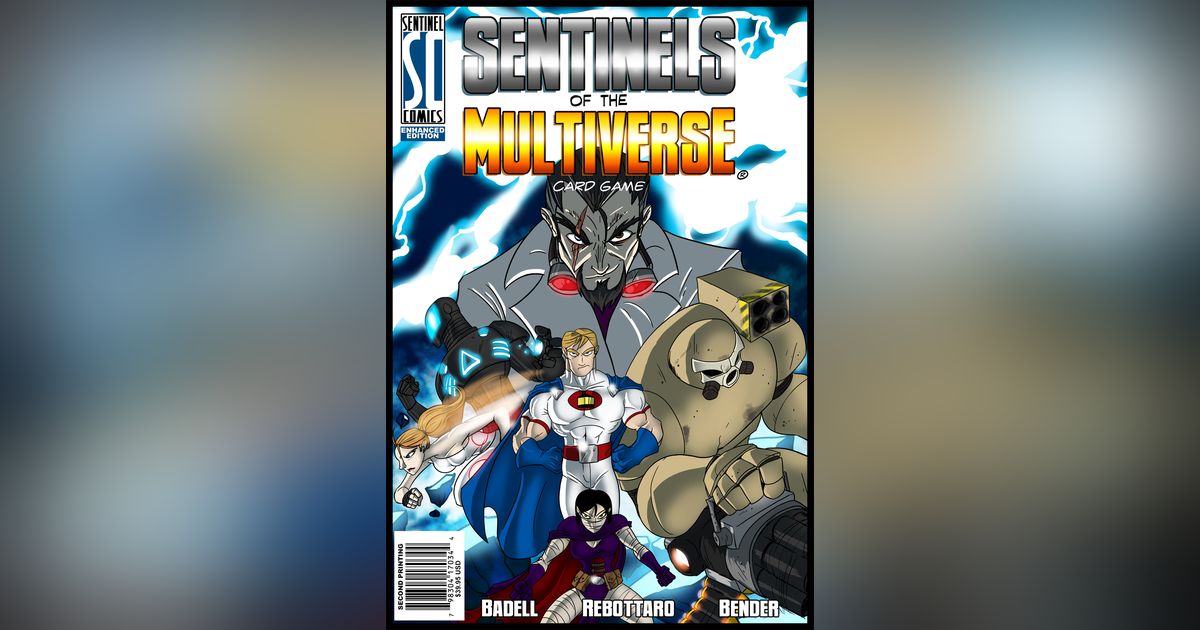
Nobody licensed this from Marvel or DC and it turns out that doesn’t matter nearly as much as I expected. Each of the original heroes, an alien warlord turned protector, a sentient tesseract, a wraith with a very specific tragic backstory, has enough personality baked into their deck that they feel like real characters within a couple plays, not generic stat blocks wearing capes. The villain decks auto-play through their own simple AI logic, no one has to run the bad guy, and a good session genuinely does feel like watching a superhero movie unfold one card at a time, which is exactly the pitch and exactly what it delivers when it’s working.
When it’s not working, it’s the bookkeeping that gets you. HP totals shift every turn, status effects stack and expire on different timers, and by round six or seven of a longer fight you’re squinting at a table full of tokens trying to remember what’s still active. I’ve heard this called a candy colored mess by at least one frustrated player and I understand the complaint even though I don’t fully share it, the fiddliness is real but the theme carries enough weight for me to forgive it most sessions. A lot of people I know have switched entirely to the digital app specifically to offload the tracking, and I get why, though something’s lost playing cards on a screen instead of across a table with friends.
Matching villain difficulty to your group and player count matters enormously and takes an experienced host to get right, throw an unprepared table at one of the harder villains and the game turns from tense to punishing fast. Four stars rather than five because of that fiddliness and because after enough plays a few of the simpler heroes start to feel thin next to the more mechanically rich ones. Still, with the full run of expansions this becomes one of the deepest cooperative games in my collection, and I keep coming back for the story more than the crunch.